European Carmakers Can't Match Chinese Tech, So They Fell Back on 'Heritage' in Paris
The Paris Motor Show felt more like a Chinese event than a European one. Throughout the halls at Porte de Versailles, advertisements were dominated by Geely and BYD, while Renault, Peugeot and other established Continental marques were present yet rarely commanded attention.
- #Chinese car brands
- #European car brands
- #Global market
- #Motor shows and events
- #Electric cars
- #BYD
- #Geely
- #Zeekr
- #Li Auto
- #Renault
- #BMW
- #Mercedes-Benz
The Paris Motor Show was underway, yet few would have guessed it from the scene. Walking through the open squares of the Porte de Versailles exhibition centre revealed a flood of advertisements for Geely and BYD. The first stand encountered belonged to Li Auto. Renault, Peugeot and the other established European makers were present, but for anyone focused on electric-vehicle technology they were unlikely to be the main draw.
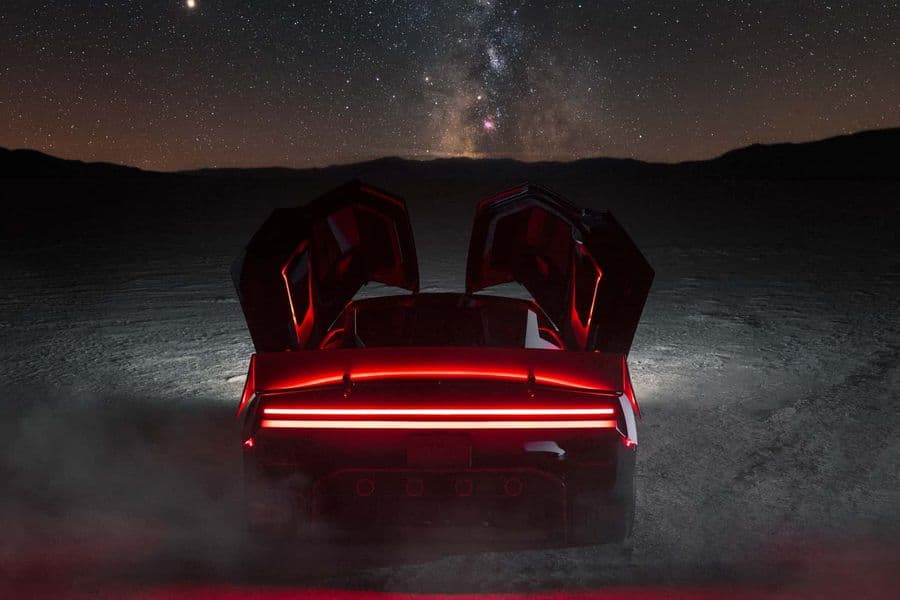
Instead, attention centred on Zeekr, Li Auto, Denza, BYD and similar brands, which promoted 10-minute charging, striking power figures and unconventional designs. Among the exhibits were the ultra plug-in hybrid Zeekr 9X, offering a 111-mile electric range and plush recliner seats, and the Li Auto Megahome, presented as a “mobile home from the future.” These manufacturers were displaying concepts that would have been hard to imagine only five years earlier. BYD, meanwhile, showcased vehicles capable of charging from 10 to 97 per cent in just nine minutes—an extraordinary figure.
Most-watched videos:
Unable to match Chinese EV technology, European carmakers turned instead to tradition. From the Renault Espace to the Citroën that is finally bringing back the 2CV, and the Alpine A310, most displayed reinterpreted concept versions of their greatest hits.
The message was clear: stay with us and it will be just like the good old days.
Whether that approach will succeed remains a harder question. Chinese brands arrived with production-ready cars and eye-catching specification sheets, while the most exciting European efforts were largely concepts. The real test is whether any of these marques can bring their most striking designs to market with technology able to compete with the best China has to offer.
The charging race isn't over yet, but the West is losing badly
At least five production cars on the show floor could charge from 10 per cent to 80 per cent in under 11 minutes, and none of them came from a Western brand. Mercedes’ upcoming AMG GT 4-Door manages the feat in exactly 11 minutes—a figure the company is proud of. When Zeekr announced that its updated 7X, already carrying a waiting list in Europe, now charges from 10–80 per cent in 10.5 minutes, the claim was treated almost as routine.
In the Chinese home market such times are hardly impressive. Geely, BYD and others already offer megawatt charging that reaches 10–97 per cent in under nine minutes and 10–70 per cent in under five. When Li Auto stated that the Li 6, its first model destined for Europe, could achieve 10–80 per cent in around ten minutes, the figure sounded more like an entry ticket than a boast.
These numbers simply quantify an edge that was already obvious on the floor. Mercedes, BMW and other Western luxury brands are only now launching their first software-defined, 800-volt electric vehicles, while Chinese manufacturers are on the second, fifth or even tenth iteration of their software-defined platforms; even the plug-in hybrid Geely 9X runs at 900 volts.
Europe on the Defensive
European carmakers appear more aware than ever of their weak position. American legacy firms lag just as far—or further—on technology, yet remain temporarily insulated at home by rules that make the sale of Chinese EVs in the United States all but impossible. For them, the problem can still be deferred, even if tomorrow is approaching rapidly.
Europe’s manufacturers face trouble now. They are under pressure on three fronts: collapsing sales in China as domestic rivals seize market share, profits in America eroded by aggressive tariffs, and a growing list of Chinese brands threatening their share at home. Higher energy, labour and regulatory costs in Europe further hinder their ability to compete globally.
The industry no longer denies the predicament. Executives sound the alarm on earnings calls and in discussions with governments. As their home countries contemplate the possible loss of one of their most valuable industries, policymakers have shown a willingness to play defence on the carmakers’ behalf.
Chinese EVs already confront steep tariffs; brands such as Li Auto face cumulative duties exceeding 40 per cent. Those rates once excluded hybrids, but Europe is tightening restrictions on hybrid imports as well. Even so, Li Auto plans to price the Li 6 in line with the BMW iX3—a model that offers less interior space and slower charging, though greater maximum range.
Legal and tariff barriers alone therefore appear insufficient. The best defence is a good offence, and the companies are scrambling to close the gap. The iX3 is a range champion, and the similarly sized Mercedes GLC EV is remarkably efficient, yet efficiency alone does not generate excitement. Hence the renewed emphasis on strong design and branding teams in the hope of recovering lost lustre.
That strategy may yet succeed. On the show floor, the Li 6 demonstrated a head-up display of exceptional quality, a Tesla-like ultra-responsive interface, notably comfortable seats and a thoroughly luxurious ride—features that underscored the competitive challenge. Yet a staged convoy of multicoloured Renault Twingo EVs circling a nearby roundabout served as a reminder that cars remain an emotional purchase, and that a legendary design still carries weight.
The same holds for the reborn 2CV, which retains the friendly, unique character of the original while shedding some of its awkwardness. And while the E-Space concept is another lounge-on-wheels, coach-door design of a type seen many times before, the presence of swivel-seat Chinese-made EVs on the same floor suggests Renault could actually deliver on the idea.
“Could” is the operative word. The 2CV could become a hit with the right price and specifications. The E-Space could challenge the growing range of electric MPVs from newer brands. Great designs such as the Renault 5 and Twingo EVs could prove lastingly charming even as lower-priced, longer-range Chinese alternatives flood the market.
For that to happen, European companies must execute—and execute quickly. Chinese firms do not tease a concept and then wait years to deliver it. They launch new products rapidly and frequently, testing many ideas and discarding the unsuccessful ones without hesitation.
That is the approach European brands now require: greater speed, greater risk-taking, and a measure of humility that acknowledges they are starting from behind. In an era of shrinking profits and intensifying competition, such a shift is not easy. Few organisations willingly gamble their remaining resources. Yet in Paris they appeared ready to go all in, wagering that design heritage, brand loyalty and established customer bases can sustain them until they are able to match Chinese rivals blow for blow.
Success remains far from guaranteed.
Source: InsideEVs